| | | The Latest at Harvard Law School's
Food Law and Policy Clinic |
|  | Launching the Next Generation of
Food Law and Policy Leaders |
| Every spring, as the academic year wraps up, I find myself reflecting with great pride on the extraordinary work our students have done in the Food Law and Policy Clinic. This year is no exception. On May 28, Harvard Law School will celebrate commencement for the class of 2026. Among those graduating are our amazing students who devoted one or more semesters to the Clinic, gaining hands-on experience using legal and policy tools to address the health, environmental, and economic impacts of our food system. These students have done truly remarkable work. They analyzed the intersection between healthcare and food policy for food is medicine partners; authored reports on topics such as state power to regulate food additives and chemicals; supported coalitions seeking critical food policy reforms such as standardization of food date labels; and observed first-hand how innovative food producers and nonprofit organizations are working to improve the health of their communities. Their time in the Clinic not only sharpened their legal and advocacy skills but also deepened their commitment to building a more just and sustainable food society. Our Clinic and the related courses we teach on food law and policy are part of an emerging academic field that is quickly growing to prepare the next generation of leaders to address global food systems challenges. Earlier this year, along with my co-author and former Clinic student Kipper Berven (HLS ’24), we released this study in the journal Food Security analyzing academic offerings (courses, degree programs, academic centers, legal scholarship) at educational institutions around the world. We found that food law and policy is beginning to take root in university curricula: 157 universities (out of 494 studied) now offer 280 different courses on food law and policy, and legal scholarship on food-related topics has expanded exponentially since the 1990s. Universities in the United States and Canada have the most robust course offerings. At the same time, regions with the highest food insecurity and potential climate impacts on food systems lag behind in the number of and variety of courses and other academic offerings. Though it is inspiring to see that this topic is increasingly integrated into legal curricula and scholarship, additional investment in training future food and agricultural law practitioners is needed by universities, governments, and funders to confront some of the most pressing social, environmental, and economic challenges of our time. Another recent piece of scholarship—also coauthored with a former Clinic student—was this article in the Vanderbilt Journal of Transnational Law discussing the intersection between governmental failure to address food loss and waste and the governmental duty to uphold the right to food—an intersection that is increasingly being acknowledged by government bodies and even a court in Pakistan. I was especially proud to publish this piece with former Clinic student Noelle Musolino (HLS ’24). Collaborating with former students in this way is one of the great joys of this work and a powerful reminder of the lasting impact of their time in working with us in FLPC. One of our core goals is to equip students to be the next generation of leaders shaping food law and policy, and we are so proud of all that they have accomplished—both within the Clinic and in the paths they forge after graduating. It is a profound privilege to accompany them for part of their journey, helping them develop the tools and vision needed to adapt our food system to current challenges and those yet to come. And it is an even greater privilege to see our alumni—like Tori Oto (HLS ’22), who was recently hired as the first Policy Lead of the Zero Food Waste Coalition and is featured below—stepping into roles where they are already transforming the food system for the better. As we celebrate this year’s graduates, we also celebrate the continued growth of the field and our collective work to build a more equitable, sustainable food future. Read on for more details, insights, and updates on our work and the field. Please also stay engaged with us by subscribing to our listserv and follow us on social media. Sincerely,  Emily Broad Leib,
Clinical Professor of Law, Harvard Law School
Faculty Director, Food Law and Policy Clinic (FLPC)
Faculty Director, Center for Health Law and Policy Innovation (CHLPI) |
|
|
|
|
| | | See you in Washington D.C for FIMCON 26 See you on June 1 & 2 at FIMCON 26 (the Food Is Medicine CONference) as we unite the full ecosystem transforming how America thinks about health, nutrition, and care. FIMCON is powered by the collective reach and expertise of The Center for Health Law and Policy Innovation, the Food Law and Policy Clinic, the American Heart Association, the Food Is Medicine Coalition, the National Produce Prescription Initiative, and the Tufts Food Is Medicine Institute. See the agenda.
Are you a member of the press interested in covering FIMCON? Learn more. |
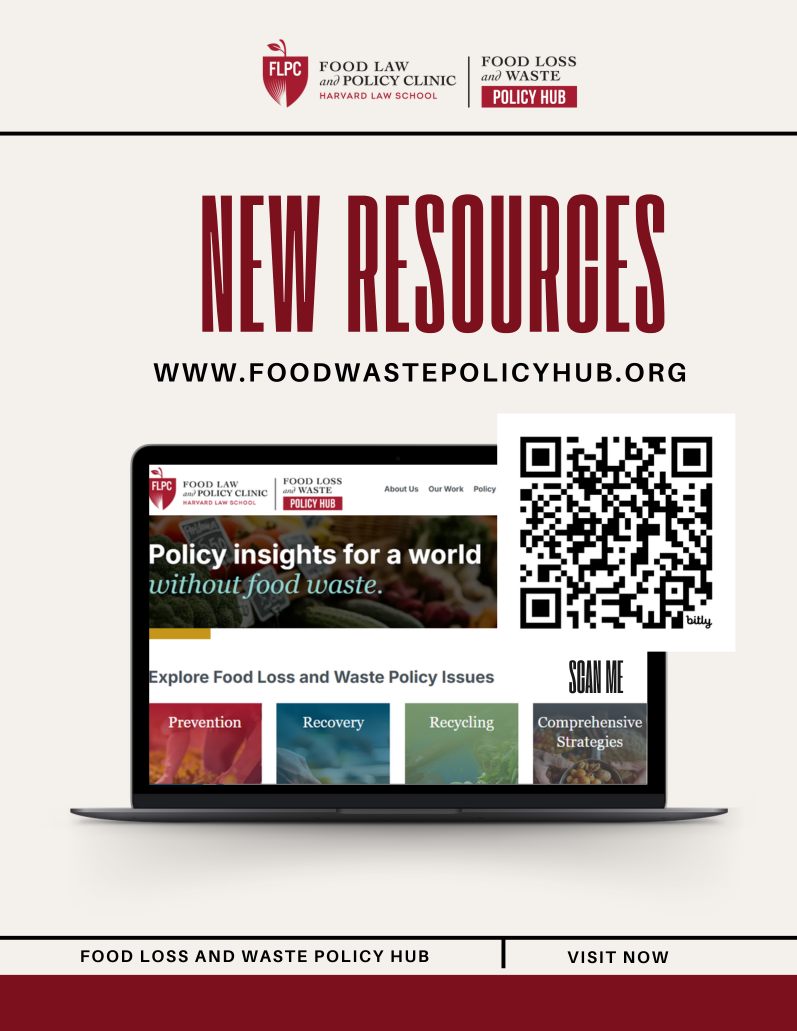
| New Resources added to our Food Waste Policy Hub Website FLPC‘s Food Loss and Waste Policy Hub is a landing page where partners, policymakers, and advocates can access all of the materials FLPC publishes in our domestic and global food waste portfolio. Several new resources have been added to the Food Loss and Waste Policy Hub over the past year, including: |
| | Hannah Robinson joins CHLPI as Advancement Officer Hannah Robinson joined the Center for Health Law and Policy Innovation as Advancement Officer in March. Hannah previously worked at the New Hampshire Charitable Foundation, as well as several institutions of higher education including University of New Hampshire, Community College System of New Hampshire, and Saint Anselm College – experiences that that made her passionate about connecting people to causes that matter across education, nonprofit, and community settings. Originally from Iowa, Hannah has lived in several regions throughout the Midwest and South and is now proud to call New England home. She holds a B.A. in Biology from the University of Northern Iowa and an M.Ed. in Higher Education Administration from Texas Tech University. Welcome to the CHLPI team Hannah! |
|
|
| | | 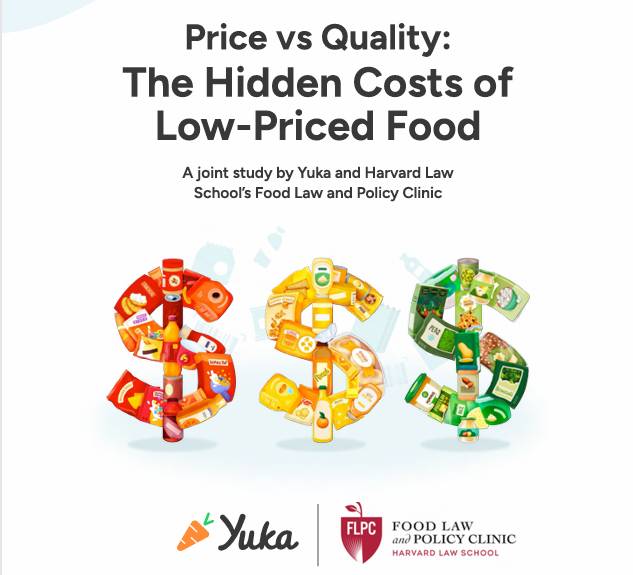 | New Report: Price vs Quality: The Hidden Costs of Low-Priced Food Published in March, this collaborative report between the Food Law and Policy Clinic and Yuka dives into how price shapes food in the United States. With an analysis of more than 800 food products sold nationwide across 12 of the most common processed food categories,
this report found that lower-priced products contain significantly more and higher-risk food additives, sugar, and salt, exposing a two-tier food system where access to healthier products is largely reserved for those who can afford them. |
|  | Ultraprocessed Foods in the U.S.: Recommended Definitions and Policies FLPC director Emily Broad Leib served as an expert panelist for this Healthy Eating Research (HER) project that aimed to develop an evidence-based definition for ultra-processed food (UPF) along with recommendations for policymakers and advocates as they advance legislative, regulatory, or other policy actions to limit UPF exposure and consumption at the local, state, and federal levels. |
|  | Promoting Food Donation: On-farm Food Loss & Agricultural Recovery This issue brief explores the challenges leading to on-farm and post-harvest food loss around the world and identifies opportunities for reducing loss and waste within agricultural systems. Drawing on global case studies and best practices, it examines how targeted interventions can strengthen food recovery infrastructure and minimize food loss. The brief also emphasizes that effective policy solutions must be tailored to a country’s unique development level, market systems, and infrastructure capacity. |
|  | Modeling the Make America Healthy Again's Food Policy Strategy on Tobacco FLPC Director Emily Broad Leib co-authored an article that summarizes and responds to the MAHA Commission’s “Make Our Children Healthy Again” report, which argues that ultra-processed foods and food industry practices are creating a childhood chronic disease crisis in the United States. The article explains how food companies have used tactics similar to Big Tobacco and suggests that the government adopt responses that draw heavily on tobacco control policies such as regulation, warning labels, taxation, and restrictions on unhealthy food environments. |
| 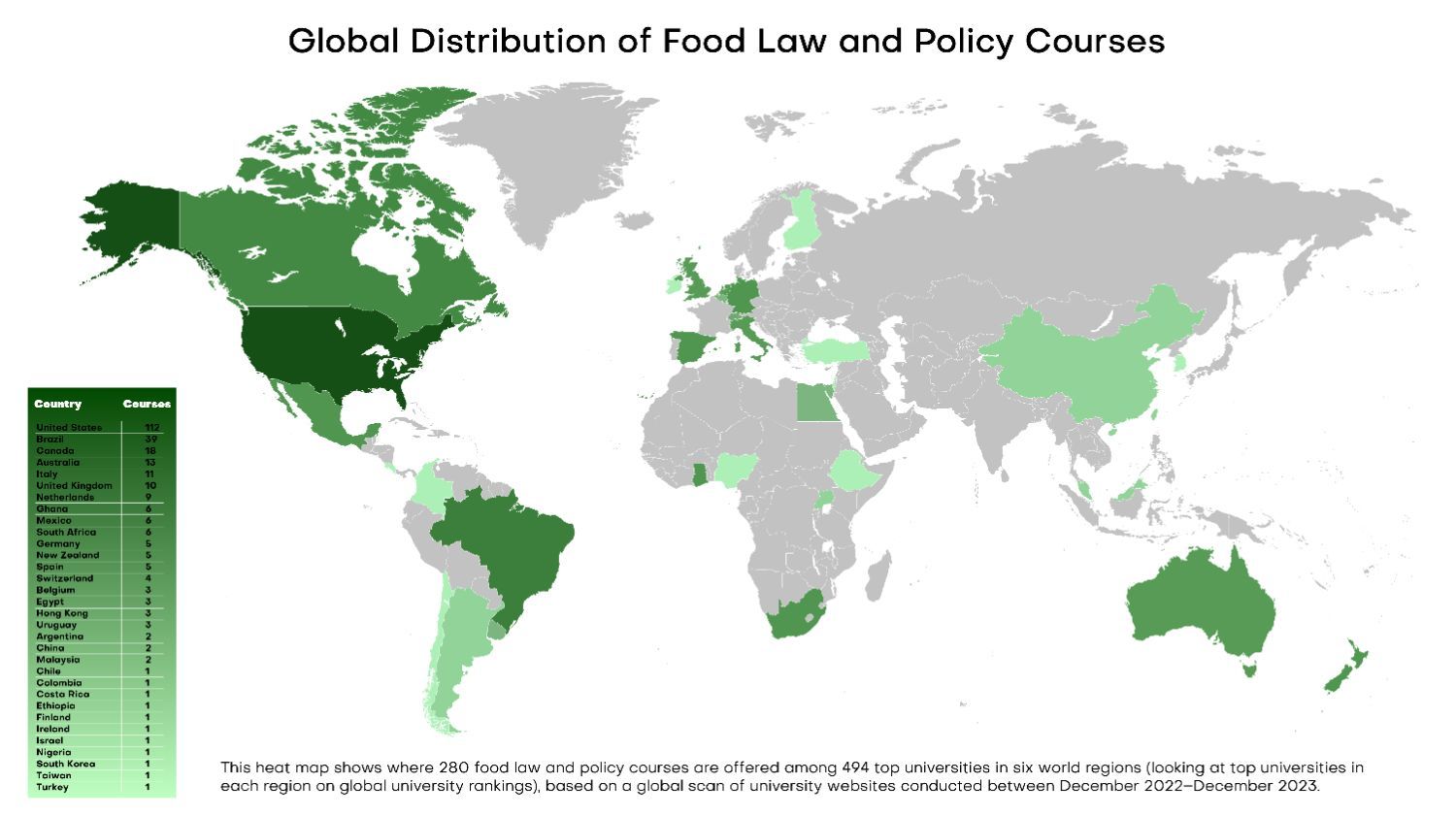 | Food Law and Policy: An Initial Assessment of an Emerging Academic Field Emily Broad Leib, along with Kipper Berven (HLS ’24) conducted a global study examining how academic offerings and scholarship in food law and policy across the globe. The study finds that the field is rapidly growing across academic institutions but remains relatively underdeveloped and unevenly supported worldwide. It also highlights a significant gap in investment in teaching this topic in regions most affected by food insecurity and climate-related risks. |
|  | Food Ingredients, State Actions, and Federal Preemption FLPC Director Emily Broad Leib, along with other experts, published this article arguing against federal government action to preempt states from taking action on food additives, ultra-processed food, and nutrition standards. The article discusses how FDA limitations and industry influence have long inhibited federal action on harmful food additives; and how, in the past few years, states have increasingly passed their own additive bans and mandating warning laws. In response, the food industry has been pushing for federal preemption to avoid differing state regulations. The article provides a historical overview of the longstanding authority of states to regulate in areas of public health, discusses relevant legal authorities, and highlights the negative implications that would result if we shifted from shared federal and state oversight of food safety laws to a system of federal control. |
|
|
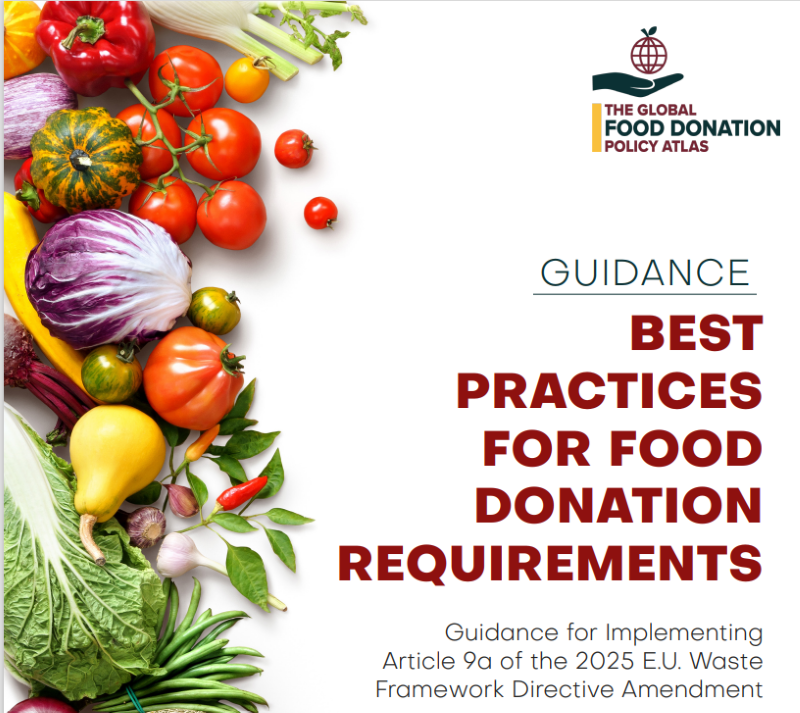 | Best Practices for Food Donation Requirements: Guidance for Implementing Article 9a of the 2025 E.U. Waste Framework Directive Amendment This guidance document examines how European Union Member States can design effective food donation policies to comply with the 2025 amendment to the E.U. Waste Framework Directive, which requires them to mandate that certain food businesses (to be selected by each member state) create contracts with food recovery organizations. It provides a comparative analysis of food donation requirements across 12 jurisdictions around the globe, explains key provisions of the Directive, and outlines the components of food donation agreements. The document also highlights best practices for creating fair, functional, and enforceable food donation requirements that strengthen partnerships across the food supply chain. |
| 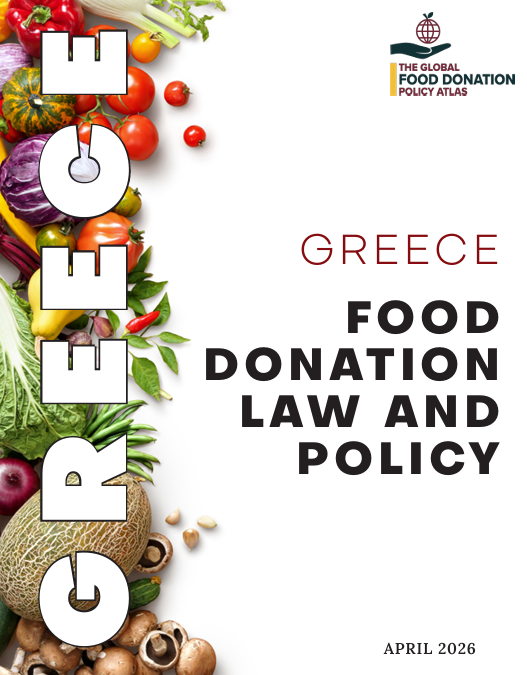 | Greece Food Donation Law And Policy Report The Harvard Law School Food Law and Policy Clinic (FLPC) and The Global FoodBanking Network (GFN), in collaboration with the European Food Banks Federation (FEBA), released a new country report on Greece as part of the Global Food Donation Policy Atlas. The report examines the legal framework affecting food waste and food recovery in Greece, and offers tailored policy recommendations to increase food redistribution and reduce food insecurity in the country. |
| 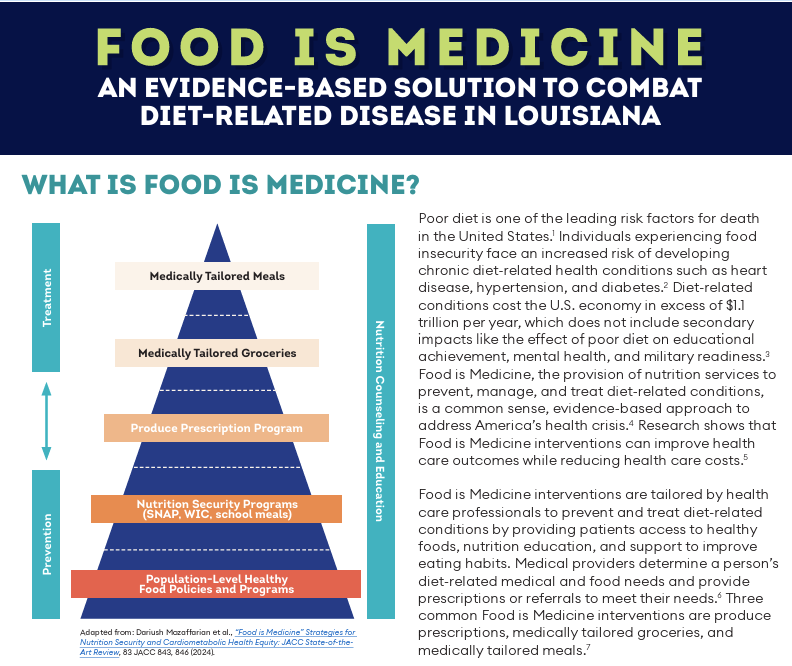 | Food Is Medicine: An Evidence-based Solution To Combat Diet-related Disease In Louisiana This fact sheet examines how Food is Medicine interventions can help address Louisiana’s high rates of food insecurity, obesity, and diet-related diseases through nutrition-based health care solutions. It highlights evidence-based programs, such as produce prescriptions and medically tailored meals, that improve health outcomes while reducing health care costs and also describes policy opportunities for program expansion through Medicaid and sustainable state support. |
| 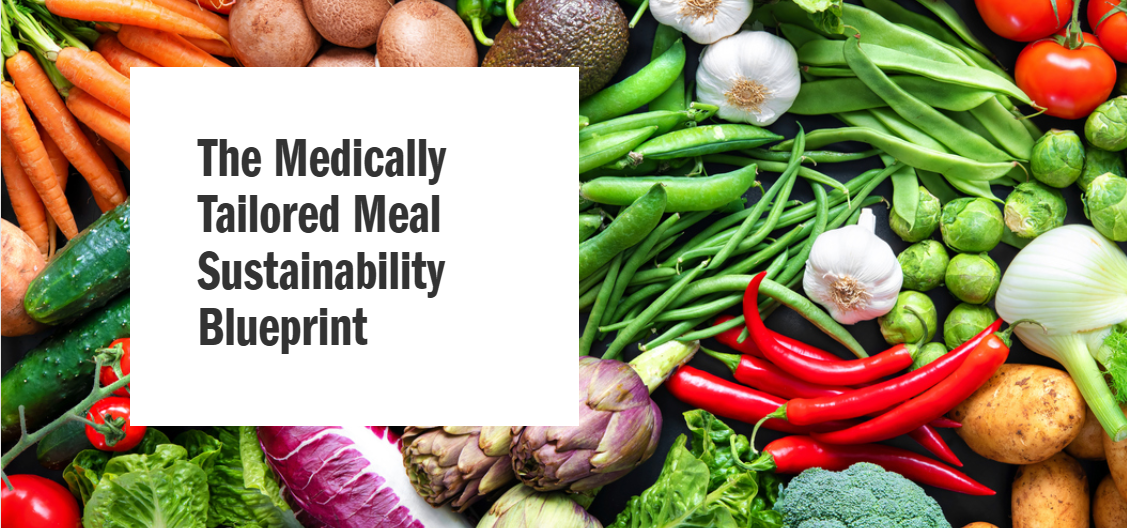 | The Medically Tailored Meal Sustainability Blueprint The Food Is Medicine Coalition and the Center for Health Law and Policy Innovation, with support from the Dohmen Company Foundation, developed a Medically Tailored Meal (MTM) Sustainability Blueprint to support integration of MTM interventions into the broader healthcare system. The Blueprint builds on federal and state Medicaid quality standards to outline program design guardrails that promote consistency, quality, and long-term sustainability. It is intended to guide MTM programs as they move toward an environment with potentially broader insurance coverage for nutrition interventions over time. |
| 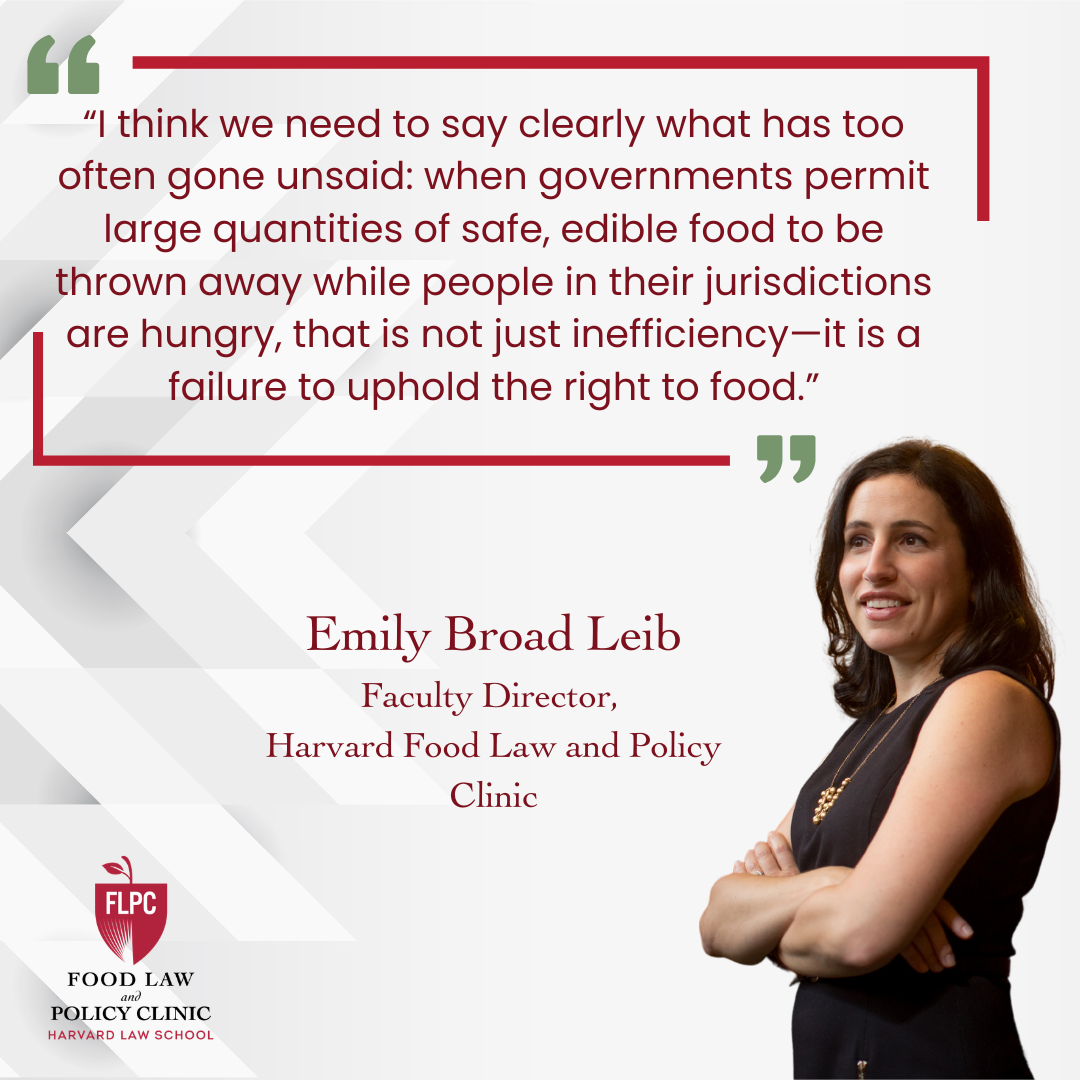 | From Surplus to Sustenance: Confronting Food Waste to Uphold the Right to Food Published by FLPC Director Emily Broad Leib and co-author Noelle Musolino (HLS ’24), this article argues that excess food waste can constitute a violation of the right to food and that recovering and donating safe and high-quality surplus food can help fulfill that right. The article reviews global policy approaches to food waste and concludes that linking food waste reduction to the right to food ultimately reinforces the need for stronger government intervention. |
|
|
|
|
| | | 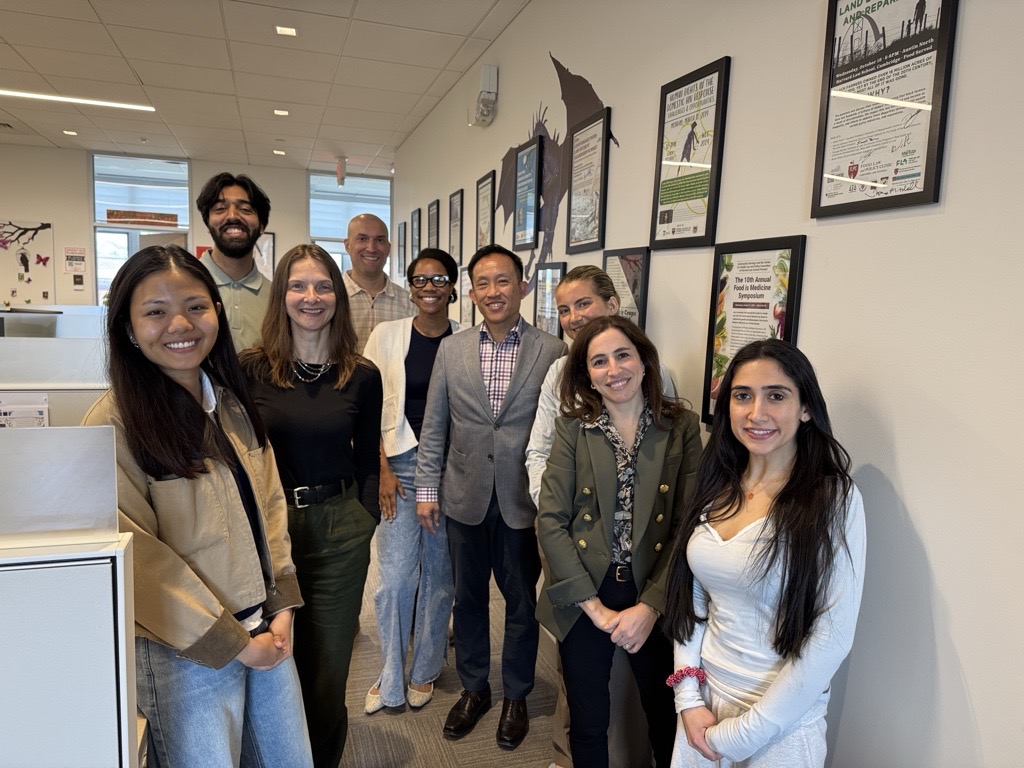 | A Conversation with HLS Alum David Chiu, City Attorney of San Francisco In April, FLPC hosted a discussion with David Chiu, the City Attorney for San Francisco, CA, and a Harvard Law School alum, about a novel lawsuit his office brought against some of the country’s largest manufacturers of ultra-processed foods, his office’s broader affirmative litigation docket, and his experiences working on a variety of food policy issues. |
| 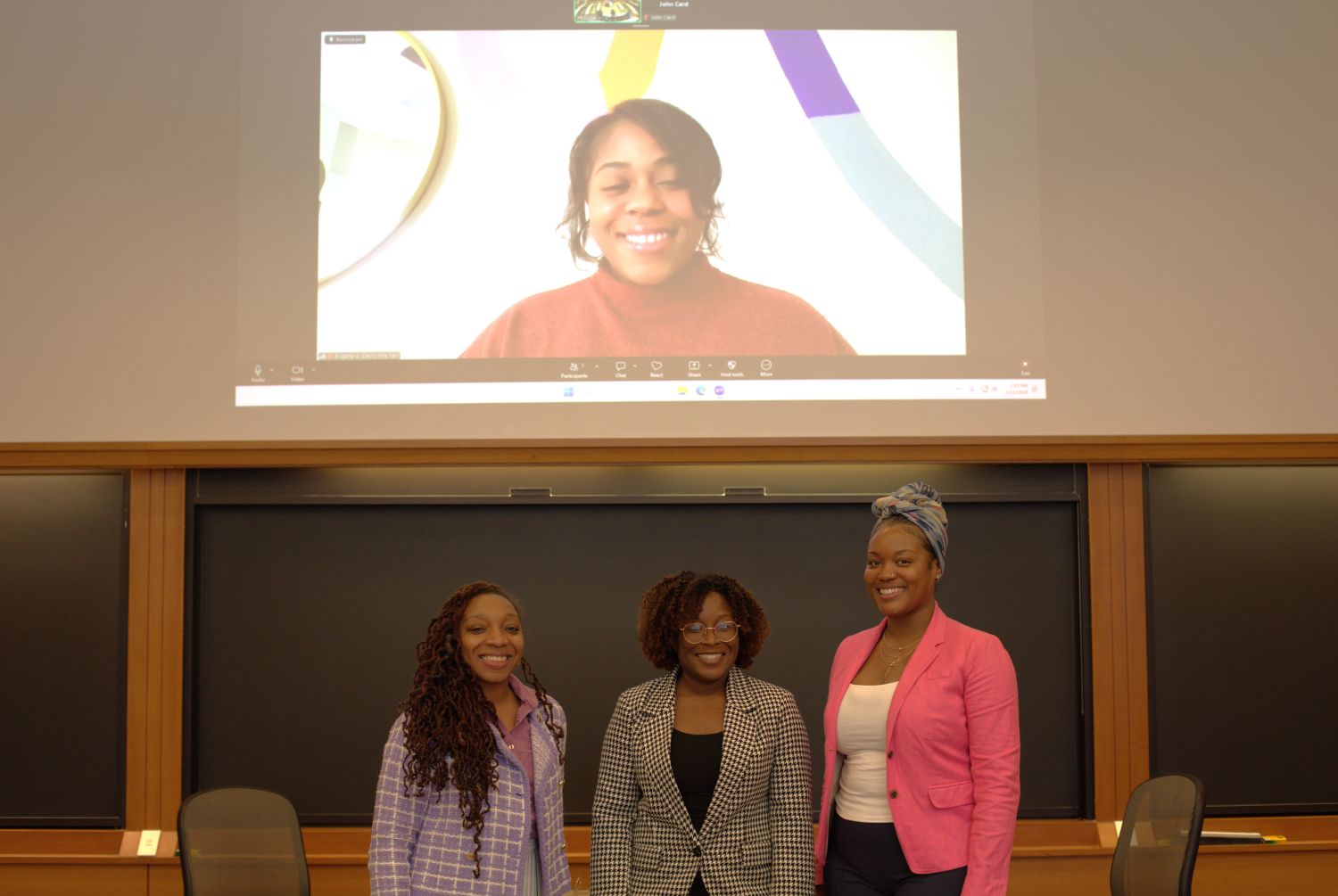 | Confronting the Black Maternal Health Crisis: A Panel Discussion on Strategies to Address and Reduce Systemic Harms Impacting Black Mothers In April, FLPC and the HLS Health Law and Policy Clinic (HLPC) co-hosted a panel titled “Confronting the Black Maternal Health Crisis: A Panel Discussion on Strategies to Address and Reduce Systemic Harms Impacting Black Mothers”. The panel explored how structural racism, environmental factors, social policy, and legal systems converge to endanger Black birthing people—and what concrete steps can begin to change those conditions. HLPC student Tia Patrick moderated the panel discussion. The event was co-sponsored with the Black Law Students Association of Harvard Law School, the Harvard Health Law Society, and the Alliance for Reproductive Justice. Read the blog. |
| 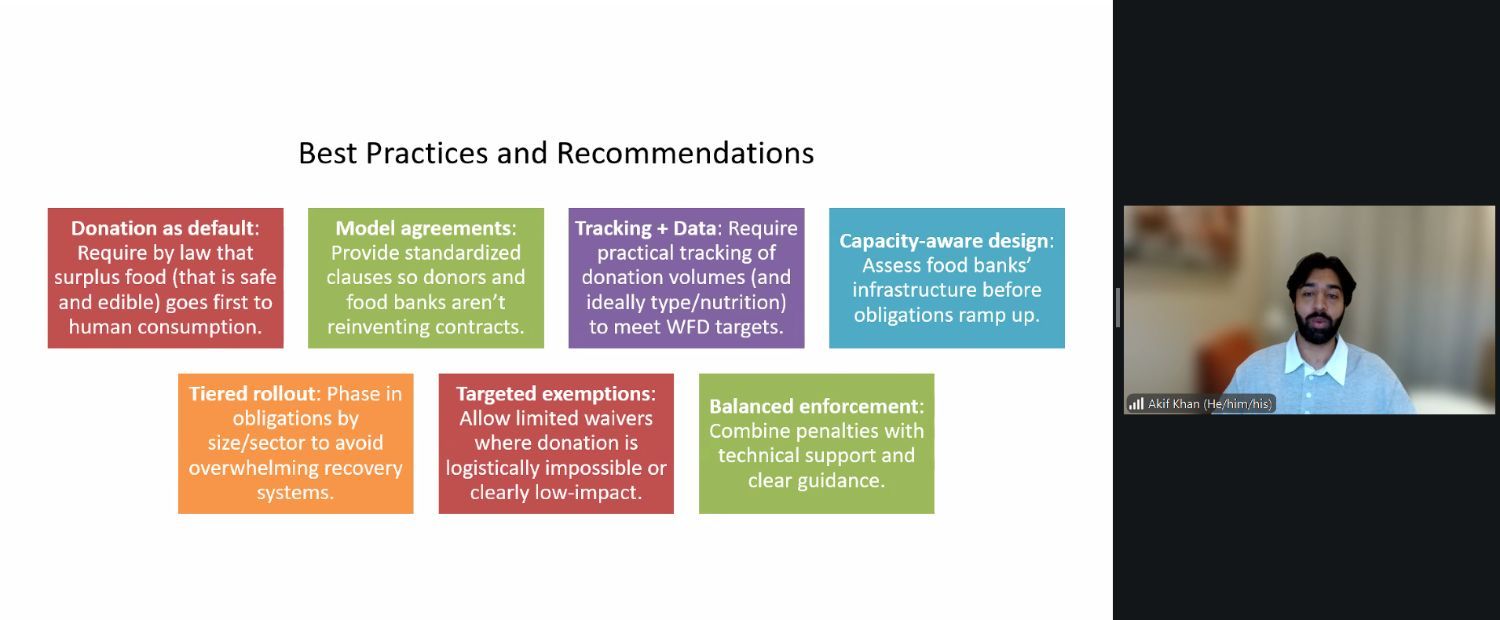 | Webinar - Waste Framework Directive Implementation: State of Play The European Food Banks Federation hosted a webinar, Waste Framework Directive Implementation: State of Play, in April. FLPC Clinical Fellow Akif Khan presented the recommendations of FLPC’s recent guidance document analyzing food donation requirement policies and outlining best practices for adopting food donation requirements in the EU, in response to a recent EU-wide requirement. The guidance was developed by FLPC in collaboration with the European Food Banks Association (FEBA) and the Global FoodBanking Network (GFN), as part of the Global Food Donation Policy Atlas project. Khan also wrote a blog about the recommendations for the Waste Framework Directive. Watch the webinar. |
| 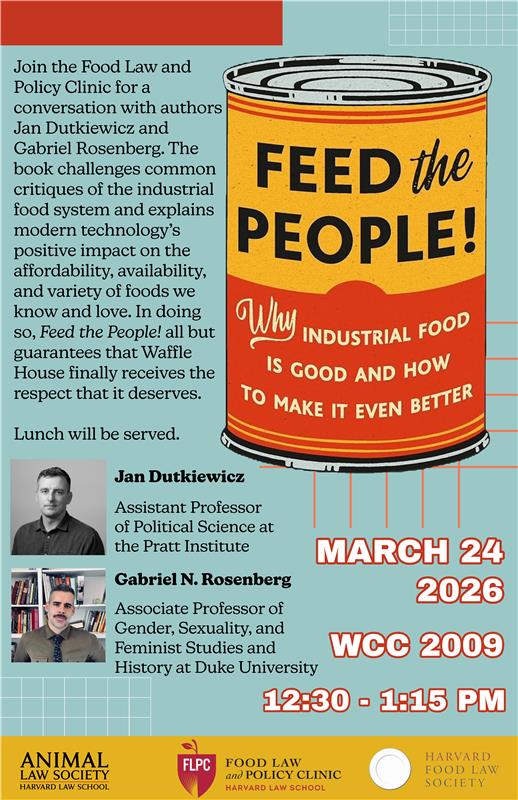 | Feed the People! Jan Dutkiewicz and Gabriel Rosenberg on How Industrial Food Can Save Us All (Book Talk) In March, FLPC, in collaboration with the Food Law Society and the Animal Law Society, hosted a conversation with Jan Dutkiewicz and Gabriel Rosenberg about their book, Feed the People! Why Industrial Food is Good and How to Make It Even Better. The book challenges mainstream critiques of the industrial food system and interrogates the push to prioritize local, artisanal foods as a solution to the food system’s harmful effects on climate and health. |
|
|
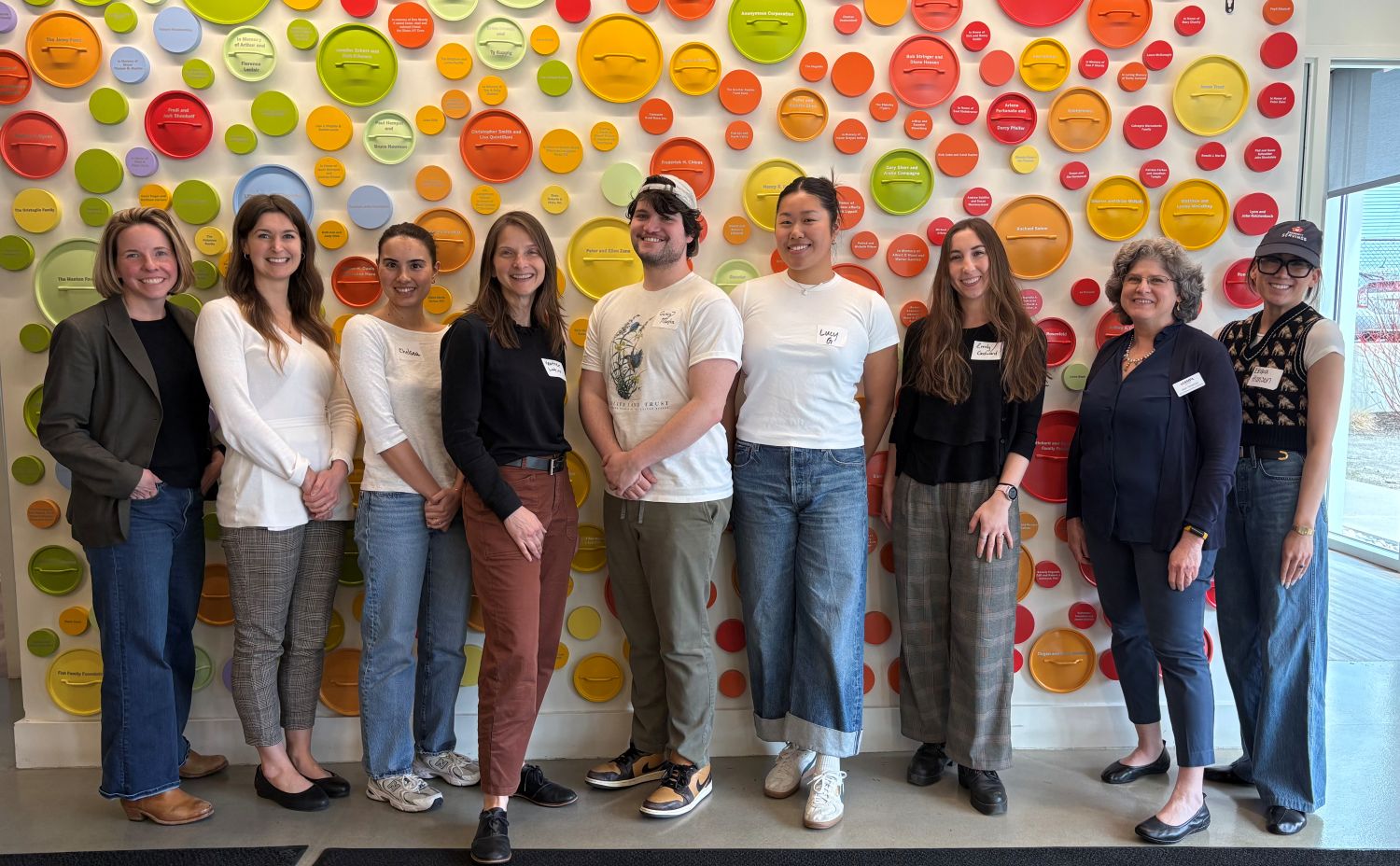 | Food Is Medicine Field Trip to Community Servings In March, CHLPI’s Food Is Medicine Team and clinical students took a field trip to Community Servings, a Boston-based Food is Medicine provider that has been preparing medically tailored meals for individuals suffering from critical or chronic illness since 1990. |
| 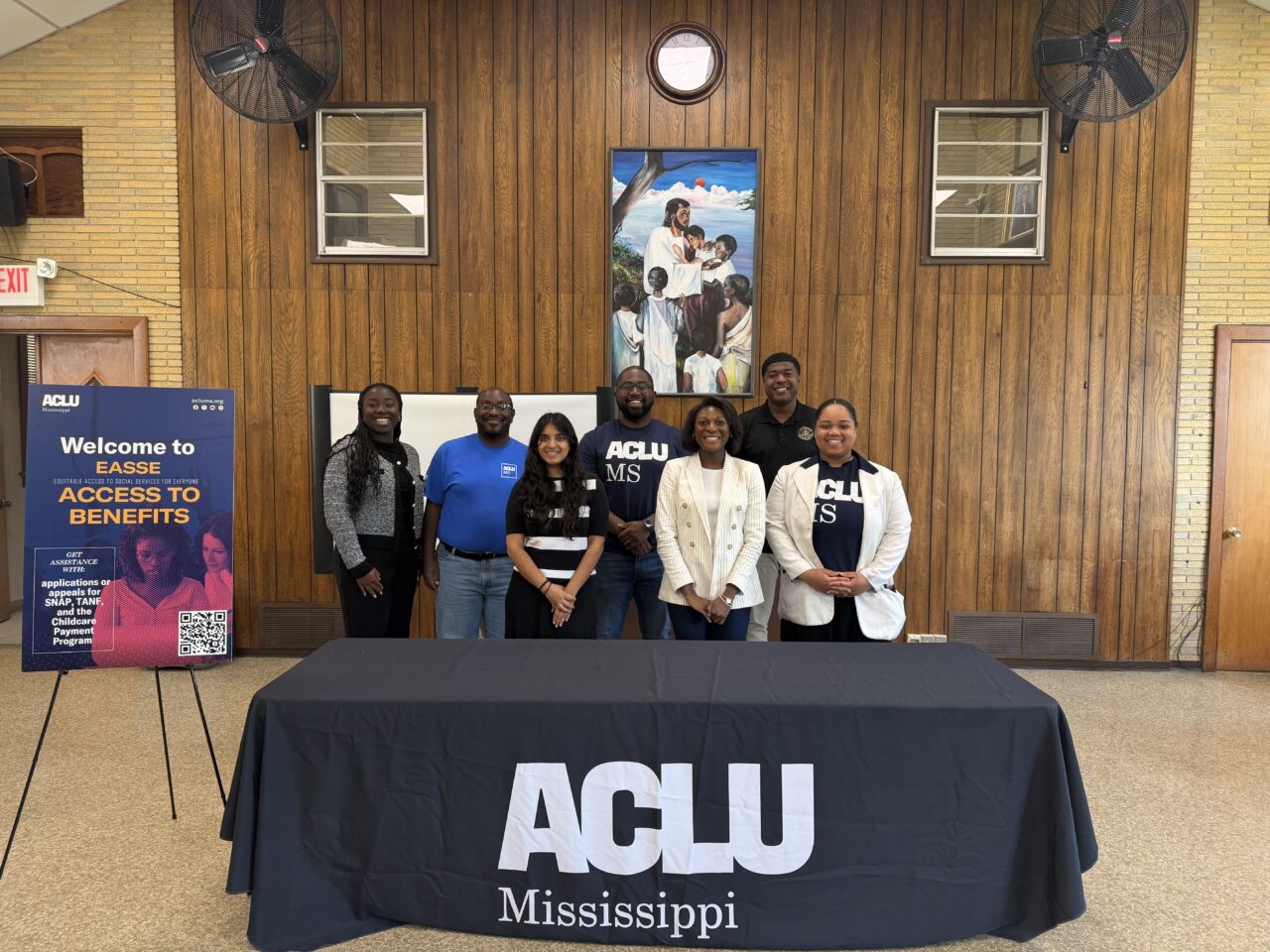 | Mississippi Delta Project Field Trip During spring break, three HLS students, Noah Harris, Ifeanyi Umunna, and Sonam Rustagi, joined FLPC Clinical Instructor Gray Norton on a HLS-sponsored pro bono trip to Jackson, Mississippi, coordinated by the Mississippi Delta Project (MDP) and hosted by MDP’s partner, the ACLU of Mississippi. The students went to serve the community and learn what makes Mississippi such a special place. Noah Harris wrote this blog about the trip. |
| 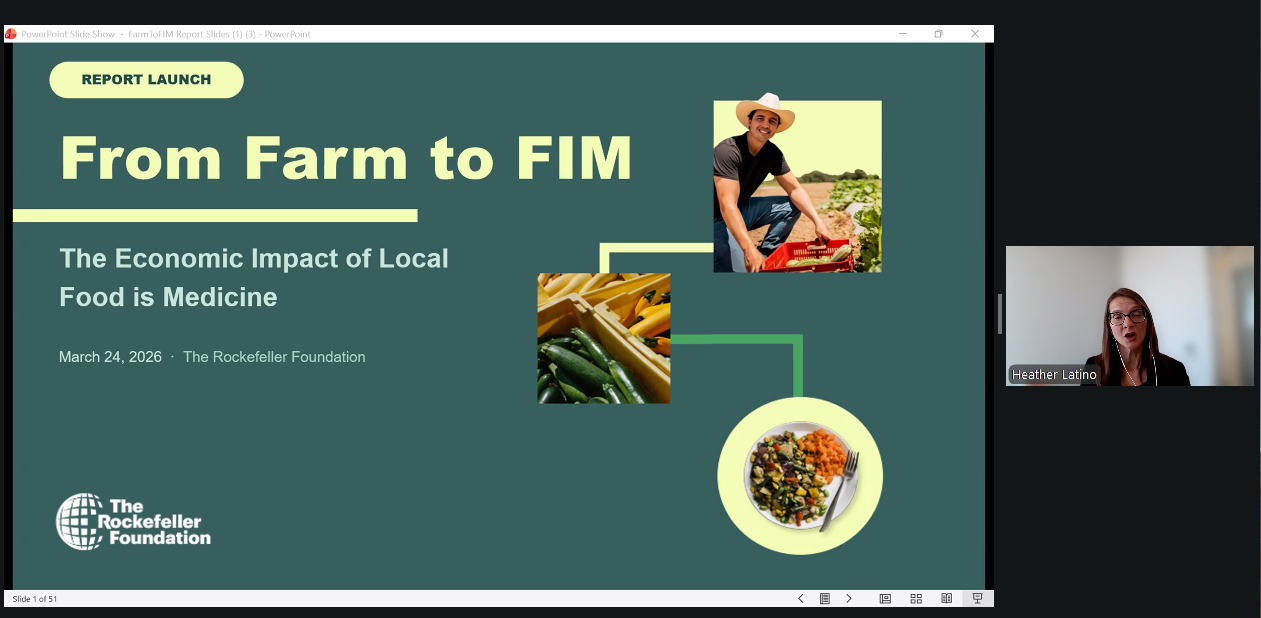 | | 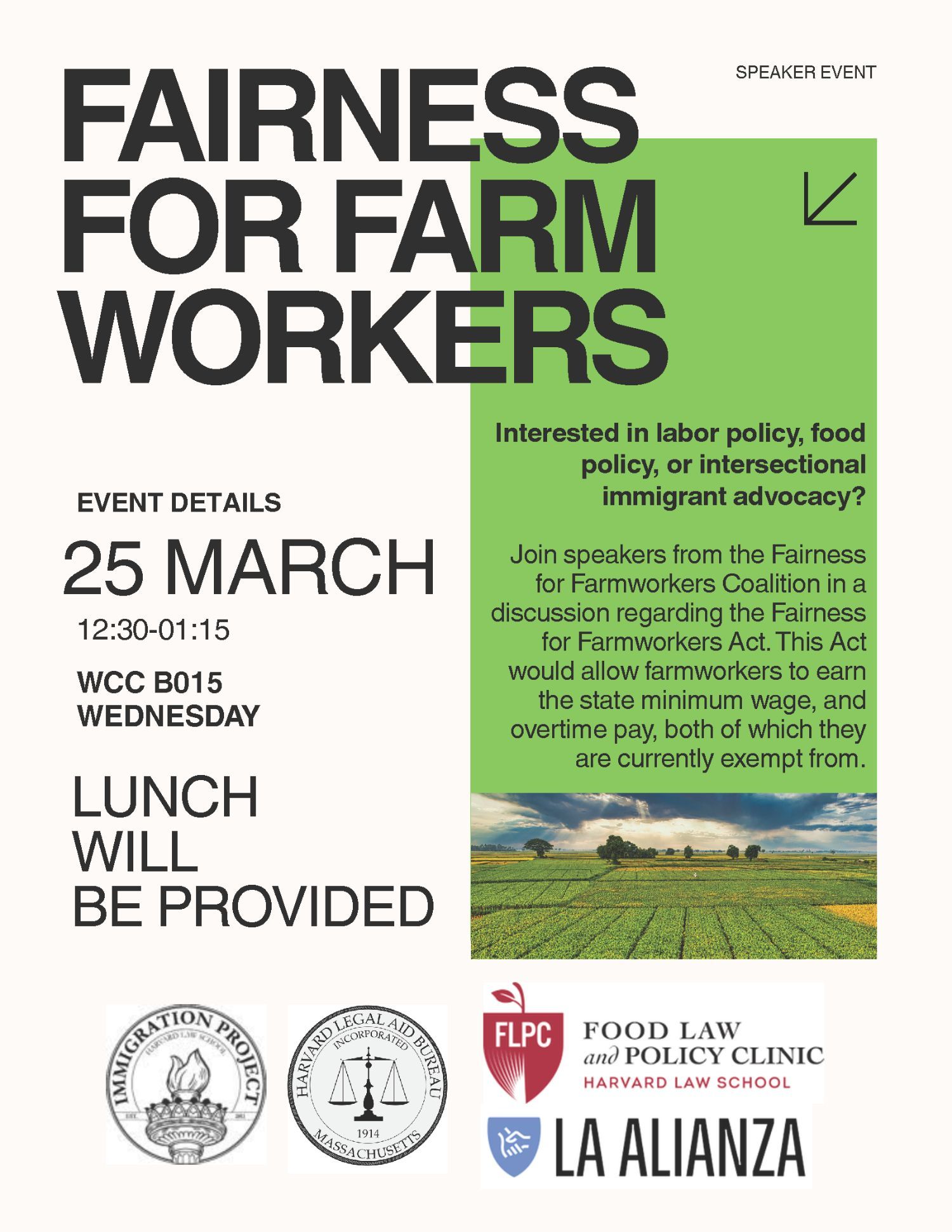 | Fairness For Farm Workers In March, FLPC held a lunch event in collaboration with the Fairness for Farmworkers Coalition to discuss the Fairness for Farmworkers Act. The Act would mandate that farmworkers earn the state minimum wage and overtime pay, both of which they are currently exempt from. The event was co-sponsored by the Harvard Law School Immigration Project, the Harvard Legal Aid Bureau, and La Alianza. |
|
|
| | | Dana Gunders and Emily Broad Leib on the Ways GLP-1s Are Changing Food Waste
Published by Food Tank
Hosted by Dani Nierenberg New Issue Brief Calls for Governments to Tackle Food Loss Where It Starts: On the Farm
Published by The Food Law and Policy Clinic
Written by Regan Plekenpol The Hidden Costs of Low-Priced Food: Yuka-FLPC (Harvard Law School) Study Finds Cheapest Products Contain 2.6 times More Additives
Published by Street Insider The bins are overflowing with food, against the backdrop of food insecurity
Published by KathiMerini
Written by Dimitra Manifava Culture, community, and resilience in the Mississippi Delta
Published by Harvard Law School
Written by Noah Harris 2025 Year-End: State Food Waste Legislative Trends—and a Closer Look at New Jersey
Published by The Food Law and Policy Clinic
Written by Bianca Hsieh What Just Happened With SNAP? A Full Breakdown of the Turmoil, the Lawsuits, and Where Things Stand Now
Published by The Food Law and Policy Clinic
Written by April Love, Gray Norton, Katherine Stecher and Taylor Walden New Report: Price vs Quality: The Hidden Costs of Low-Priced Food
Published by The Food Law and Policy Clinic
Written by Emily Broad Leib, Julie Chapon, and Gabriela Mourad Vicenssuto Over 100 unreviewed chemicals found in everyday US foods, study reveals
Published by New Food Magazine
Written by Ben Cornwell |
|
|
|
|
| | | Tori Oto Becomes First Policy Lead of the Zero Food Waste Coalition (ZFWC) Former Food Law and Policy Clinic student and FLPC Fellow Tori Oto (HLS ‘22), a food waste policy consultant and attorney, was hired in March as the first Policy Lead of the Zero Food Waste Coalition. Throughout her work, Tori has prioritized policies that reduce food loss and waste, increase food access, and ensure greater equity in the American food system. As the Policy Lead, she will work with the Executive Director to develop and drive the strategic plan for the coalition, building on the momentum the coalition has garnered in the past three years to continue growing the coalition and its impact on food loss and waste policy at the federal and state level. She will manage ZFWC's policy initiatives through their direct advocacy work, by working with coalition members, and by expanding the coalition's strategic partnerships. Tori first started working with the coalition when it was just an idea among the coalition founders when she was a fellow at FLPC. She continued to support the coalition as a federal policy working group co-chair and administrator as a consultant after her fellowship ended. We are excited because as founders and steering committee members of Zero Food Waste Coalition, this means the FLPC team will continue to work closely with Tori. Huge congratulations to Tori! Know an alumni doing work that we should highlight? Send us an email. |
|
|
| | |
|
| | | The Harvard Law School Food Law and Policy Clinic (FLPC) serves partner organizations and communities by providing guidance on cutting-edge food system issues, while engaging law students in the practice of food law and policy. FLPC’s work focuses on increasing access to healthy foods, supporting sustainable production and food systems, promoting community-led food system change, and reducing waste of healthy, wholesome food. FLPC is committed to advancing a cross-sector, multi-disciplinary and inclusive approach to its work, building partnerships with academic institutions, government agencies, private sector actors, and civil society with expertise in public health, the environment, and the economy. Learn more about FLPC. |
| | |
|
| |
|
|