| | | | | | The Latest at Harvard Law School's
Food Law and Policy Clinic | |  | Dear Friends, We are witnessing an unprecedented level of attention on food issues across the United States. At the federal level, and in the dozens of states actively considering legislation aimed at improving diet quality and combating chronic disease, there is growing momentum for healthier food systems, and that is truly good news. We are seeing a growing understanding of the profound link between food and public health, and it presents a significant opportunity. However, we're also facing significant headwinds. We are increasingly concerned by staffing cuts at the federal level, which threaten to upend the vital work of maintaining and building upon existing food policy progress. These reductions not only strain the capacity of agencies but also risk the loss of invaluable institutional knowledge and talent, hindering our ability to address complex food system challenges. Furthermore, we're deeply troubled by cuts to grants and contracts that support countless important organizations working to improve the food system, as well as cuts to essential food and other benefits that we know will harm millions of people. At a time when we're striving to ensure all individuals have access to healthy, nourishing food, reducing support makes it increasingly difficult for many to simply put food on the table, undermining our shared goals of tackling diet-related diseases and nutrition insecurity. As we navigate this evolving landscape, FLPC's commitment to advancing science-based food policies remains steadfast. We will continue to advocate for robust governmental support, equitable access to healthy food, and resources to build a more just and sustainable food system for all. Read on for more details, insights, and updates on our work and the field. Please also stay engaged with us by subscribing to our listserv and follow us on social media. Sincerely,  Emily Broad Leib,
Clinical Professor of Law, Harvard Law School
Faculty Director, Food Law and Policy Clinic (FLPC)
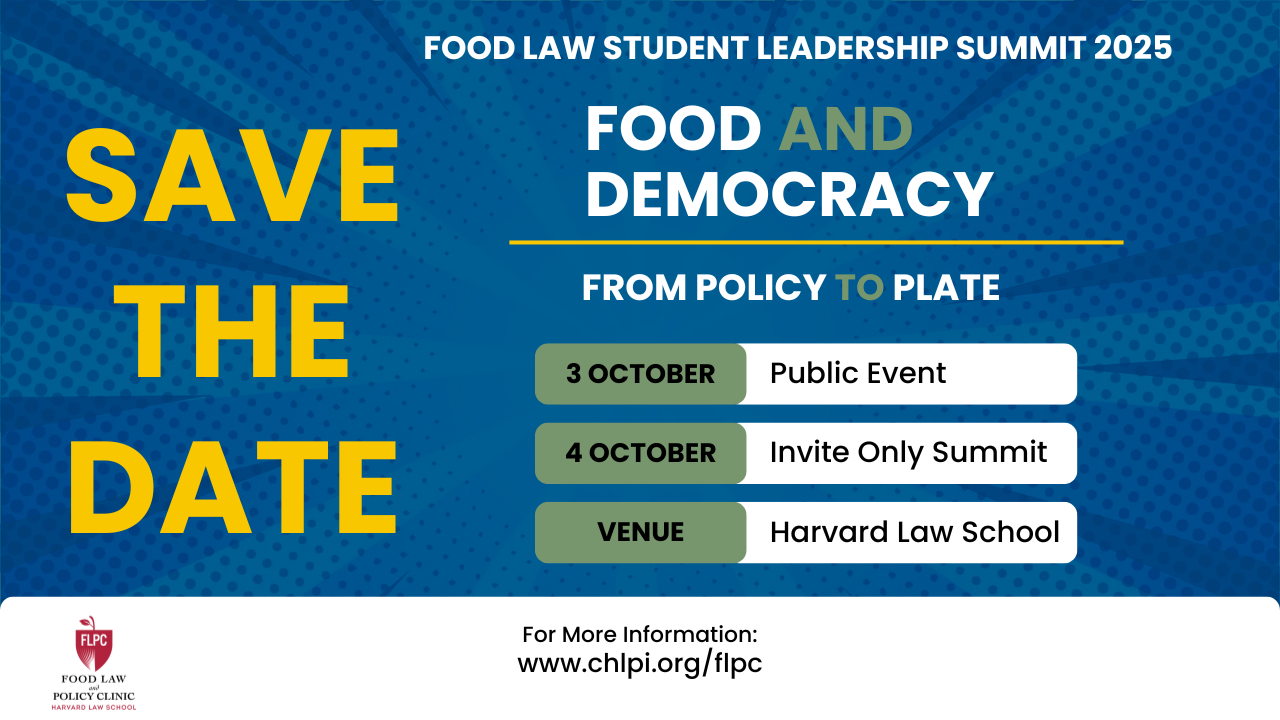
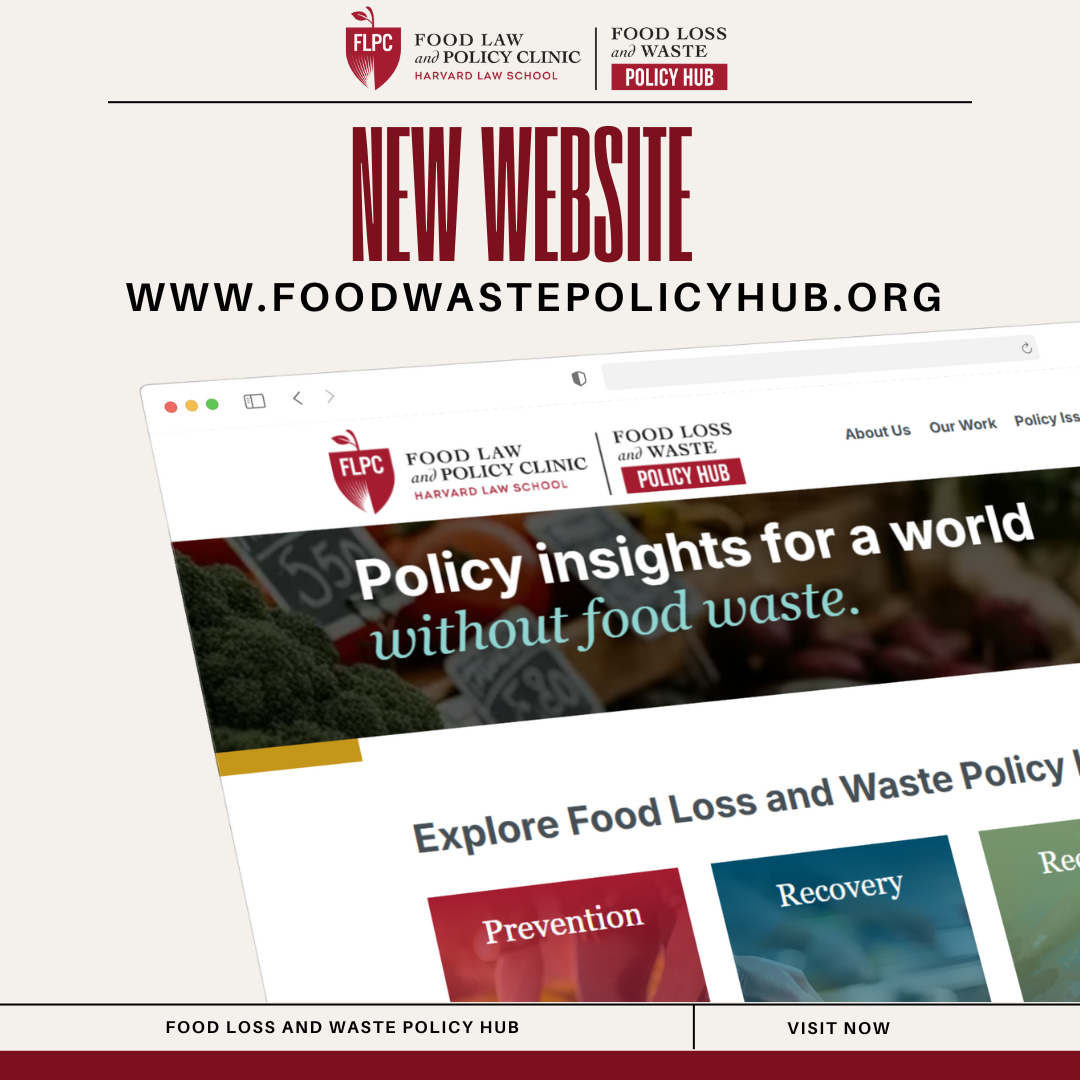
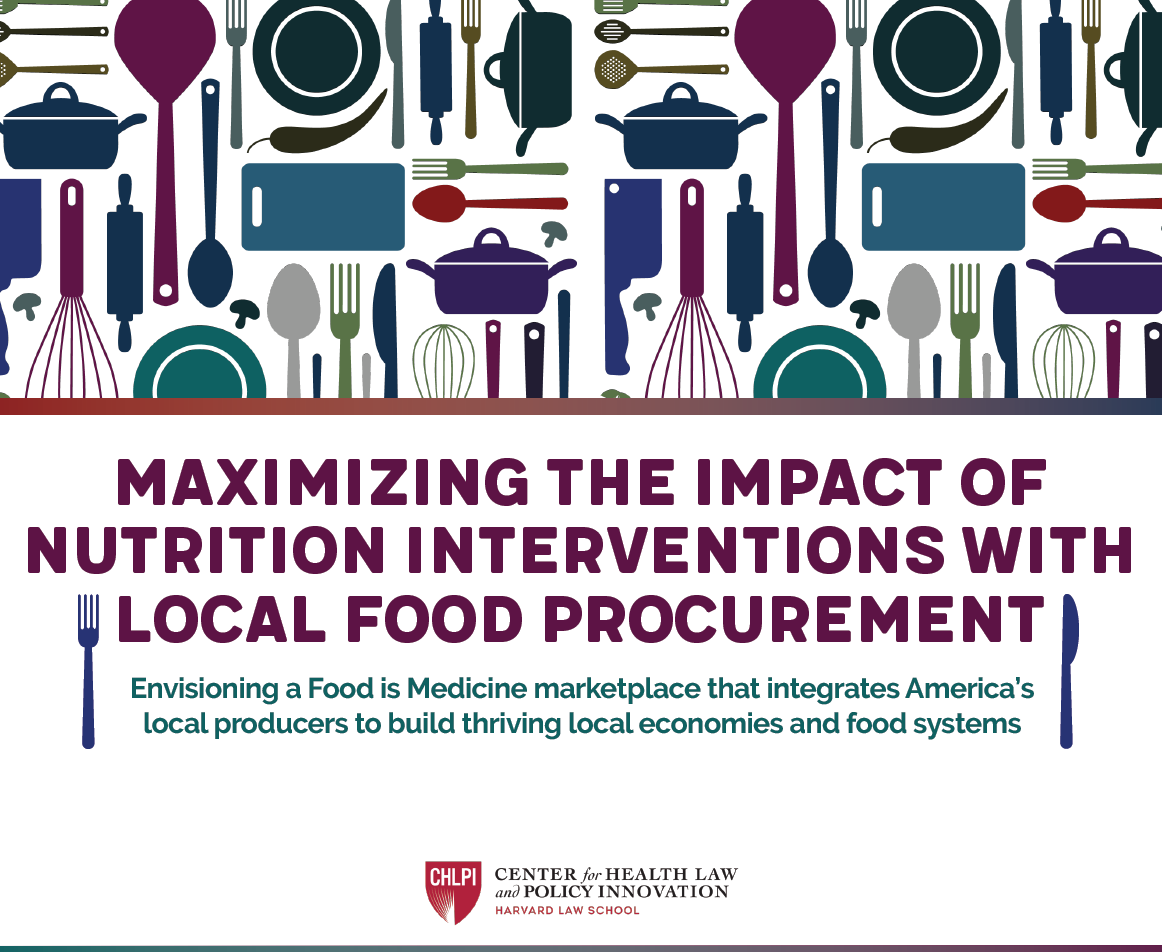
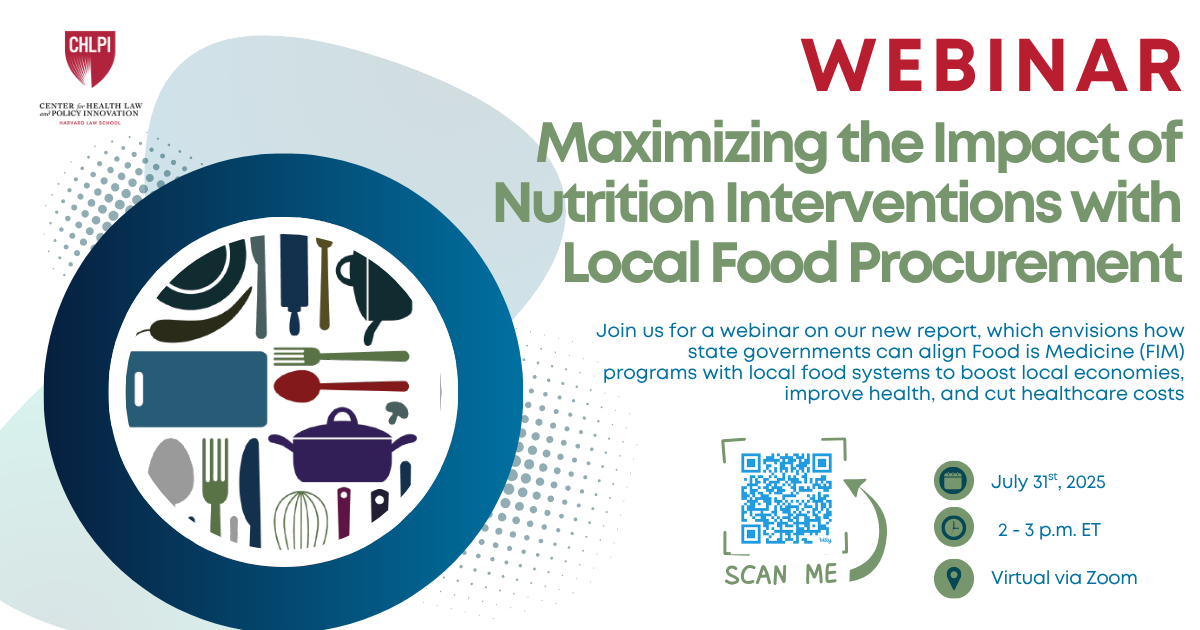
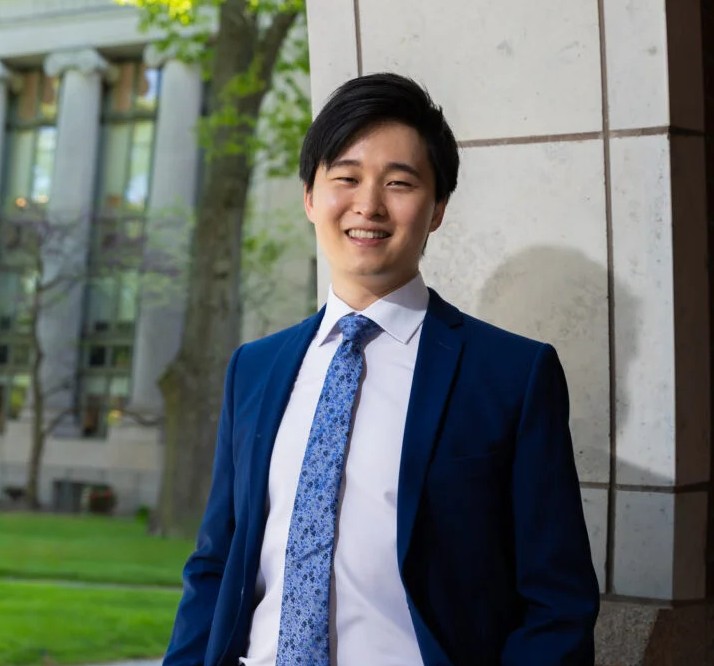
Faculty Director, Center for Health Law and Policy Innovation (CHLPI) | | | | | | | | | | Save the Date: "Food and Democracy: From Policy to Plate" - FLSN Summit 2025 The Food Law Student Leadership Summit returns to Harvard Law School! This year's Summit will zoom in on the intersection of food and democracy. It opens with an open to the public panel series and reception on the evening of Friday, October 3, to explore how current administrative and congressional actions are reshaping our food system. On Saturday, October 4, there will be an invite-only Summit. Are you a law student interested in attending the Summit? We welcome applications from any law student (JD or LLM) currently attending a U.S. law school. Applications are reviewed on a rolling basis and accepted applicants will be notified from August 11. Apply today! | | | | | | New Resource: Food Loss and Waste Policy Hub FLPC launched its new Food Loss and Waste Policy Hub website—a comprehensive platform for exploring policy solutions to reduce food loss and waste in the U.S. and globally. With research, case studies, legal tools, and more, the website serves advocates, policymakers, nonprofit organizations, and academics working to create sustainable, equitable food systems. Explore the website and share it with your networks: https://foodwastepolicyhub.org/ | | | | | | CHLPI Releases Report on Food Purchasing in Food is Medicine The Center for Health Law and Policy Innovation is releasing its new report on "Maximizing the Impact of Nutrition Interventions with Local Food Procurement". This report explores how state governments can integrate local and regional policy priorities into their Food is Medicine programs such as through local food procurement, thereby maximizing program impact. The report outlines the fundamentals of procurement, showcases state policy examples that center local food and community-based organizations in their Food is Medicine initiatives, and offers strategies for prioritizing local values to enhance healthcare investments. | | | | | | Webinar: Maximizing the Impact of Nutrition Interventions with Local Food Procurement Join us on July 31st at 2 pm Eastern Time for the launch of our new report exploring how state governments can align Food is Medicine (FIM) programs with local food systems values to strengthen local economies while improving health outcomes and reducing healthcare costs. As diet-related illness and food insecurity rise, don’t miss this webinar unveiling this important resource. The webinar is targeted at policymakers, healthcare leaders, community-based FIM providers, and food systems advocates. | | | | | | | | | |  | Poland and Ireland Food Donation Law and Policy Guides The Harvard Law School Food Law and Policy Clinic (FLPC) and The Global FoodBanking Network (GFN), in collaboration with the European Food Banks Federation (FEBA), released two new country reports on Poland and Ireland as part of the Global Food Donation Policy Atlas. These reports examine the legal frameworks affecting food recovery and offer tailored policy recommendations for Poland and Ireland to increase food redistribution and reduce food insecurity in both countries. | | 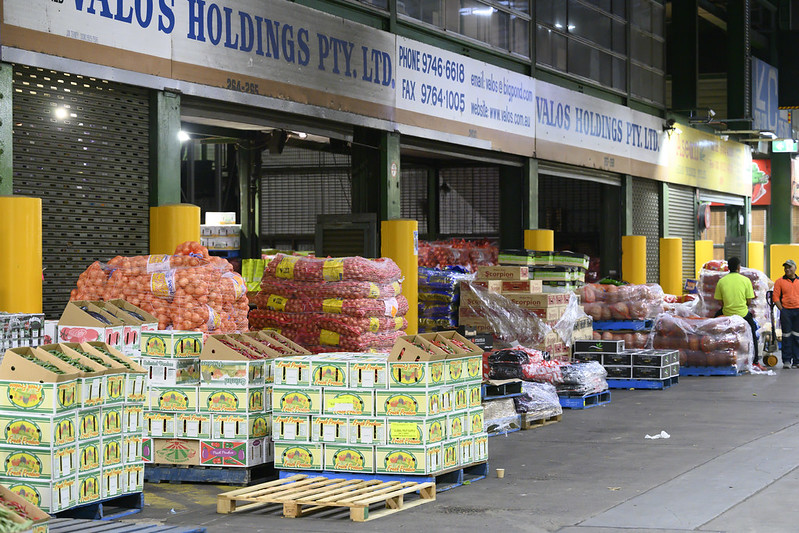 | | | 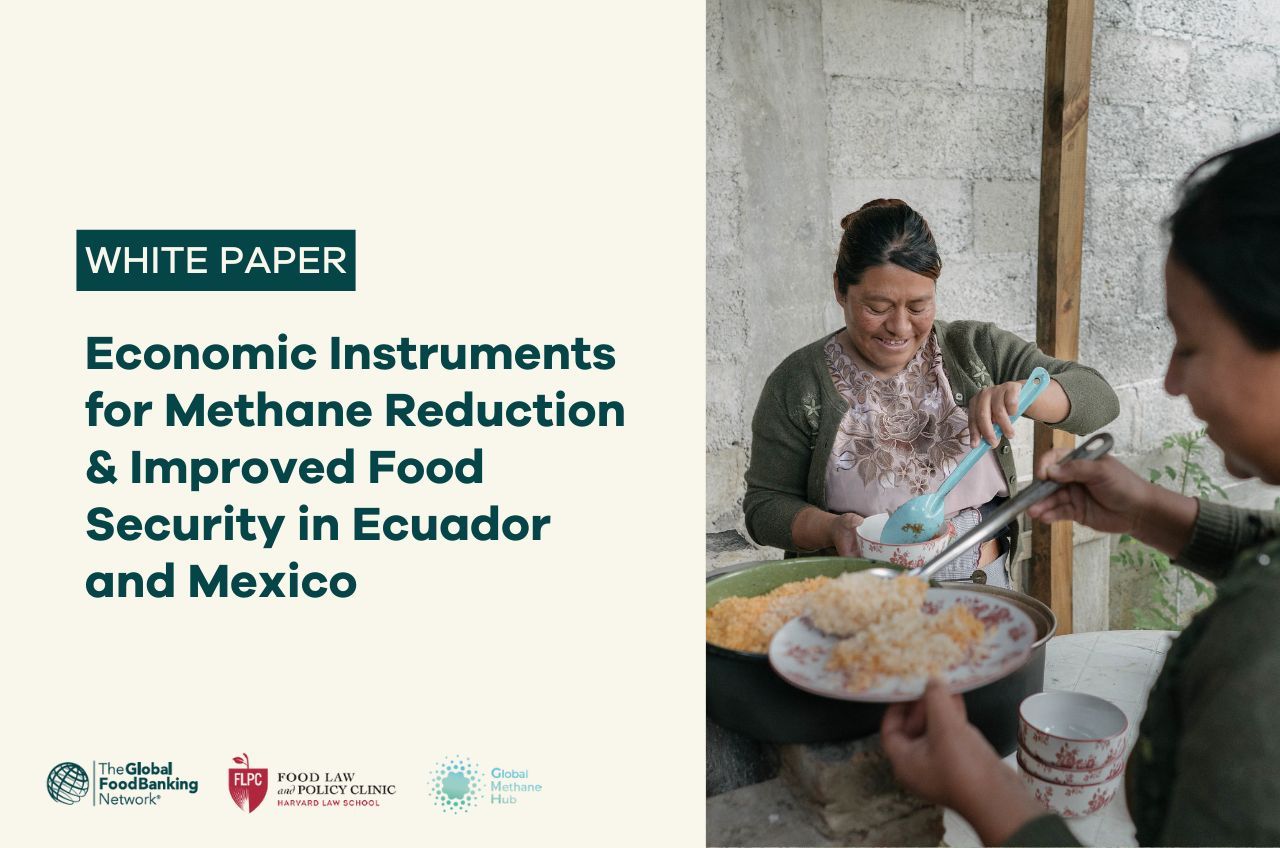 | Economic Instruments for Methane Reduction & Improved Food Security in Mexico and Ecuador To explore the role of food recovery in mitigating climate change and increasing community resilience, The Global FoodBanking Network and the Harvard Law School Food Law and Policy Clinic, with funding from the Global Methane Hub, examined key laws and policies in Mexico and Ecuador that use financial incentives or penalties to target methane reduction. The papers describe each country’s unique approach to relevant greenhouse gas emissions reduction policies and discuss the potential role for food donations to help improve food security while reducing methane emissions. | |  | | | | | Theme Issue Briefing: Food, Nutrition & Health On April 8, 2025, Health Affairs held a briefing for their theme issue on food, nutrition, and health. The theme issue featured articles highlighting the relationships between food security, nutrition security, income, and health; Food is Medicine programs; innovative Medicaid initiatives; and much more. Articles authored by CHLPI's Emily Broad Leib, Katie Garfield, and Erika Hanson were featured in the themed issue. | |  | FLPC Comments on Food Date Labeling: A Response to the Joint FSIS and FDA Request In this Comment, submitted in response to the USDA, Food Safety and Inspection Service (FSIS), and the FDA Request for Information on Food Date Labeling, FLPC requested that FDA and USDA use their statutory authority to federally standardize U.S. food date labeling to allow voluntary application of only one of two label phrases: “BEST If Used By” as a quality label and “USE By” as a safety label. | | |  | Science-Based Food Policies to Prevent Diet-Related Diseases In this report, published by the University of Pennsylvania Center for Food and Nutrition Policy, Alyssa J. Moran, Emily Broad Leib, and Christina A. Roberto discuss the need for evidence-backed food policies to combat the rising tide of diet-related chronic illnesses in the United States. The report highlights several key policy areas with strong scientific support, including addressing harmful food additives, restricting public program subsidies for sugary drinks and ultra-processed foods, and promoting healthier food environments through initiatives like sugar-sweetened beverage taxation and expanding fruit and vegetable subsidies in programs like SNAP. | |  | | |  | Consumer Perceptions of Food Date Labels: 2025 National Survey Researchers from the Harvard Law School Food Law and Policy Clinic, ReFED, and Johns Hopkins Bloomberg School of Public Health published findings from a new 2025 survey that updates a previous survey conducted in 2016. The 2025 survey, conducted January 10-14, 2025, by The Harris Poll among over 2,000 U.S. adults, found that 43% of U.S. consumers say they always or usually discard food near or past the label date (up from 37% in 2016), and 88% say they do so at least occasionally (up from 84% in 2016). | |  | Pioneers in the Fight Against Food Waste Coauthored by the Global FoodBanking Network and FLPC, with support from the Global Methane Hub, this report compares "food waste deterrence policies" (policies restricting, banning, or making it more expensive to dispose of food, or requiring donation of edible food) in South Korea, France and Peru. Our research identifies opportunities, obstacles, and best practices to inform future food waste deterrence measures globally. | |  | | | | | | | | | | |  | Food Law and Policy Clinic Speaker Series The Food Law and Policy Clinic held a Speaker Series in the Spring of 2025, hosting talks with renowned experts on several policy issues at the forefront of the food law and policy landscape. They included: The series was co-hosted by Harvard Food Law Society and Harvard Health Law Society. | |  | Ruin Their Crops on the Ground: Book Talk The Food Law and Policy Clinic hosted a conversation about the book Ruin Their Crops on the Ground, a history of the use of food in U.S. law and politics as a weapon of conquest and control. The talk featured the book's author, Second Century Chair Professor of Law at Southwestern Law School, Andrea Freeman, in discussion with Aziza Ahmed, Daniel P.S. Paul Visiting Professor of Constitutional Law at Harvard Law School. | | |  | Ensuring The Right to Food in the Face of Climate Change: The Role of UN FAO The Harvard Human Rights Journal and the Food Law and Policy Clinic hosted a talk by Dr. Daniel Gustafson, Special Representative of the Director-General at the United Nations Food and Agriculture Organization (UN FAO) and former Deputy Director-General of the Organization, on “Ensuring the Right the Food in the Face of Climate Change: The Role of UN FAO.” Dr. Gustafson addressed the interrelations between climate change and global hunger from the perspective of the UN FAO. | | | | | | | | | | | | | | | | Eric Zhao Receives Exemplary Clinical Student Award Former FLPC Clinical Student Eric Zhao ’25 was the recipient of this year's David A. Grossman Exemplary Clinical Student Award. Eric, who participated in four clinics during his time at Harvard Law School, including the Food Law and Policy Clinic, was celebrated for his thoughtful and outstanding work. Eric enrolled in the Food Law and Policy Clinic to learn about policy advocacy and social change. During his time at the clinic, Eric supported a labor rights coalition advocating for policies to improve farmworker conditions and assisted a food cooperative with understanding the laws and regulations impacting their business. FLPC could not be more pleased that Eric received this well-deserved recognition for his contributions to the work of our clinic, Harvard Law School, and on behalf of his clinical clients. Eric, thank you for your incredible work and best of success in your future endeavors. | | | | | | | | | | | | | | | | The Harvard Law School Food Law and Policy Clinic (FLPC) serves partner organizations and communities by providing guidance on cutting-edge food system issues, while engaging law students in the practice of food law and policy. FLPC’s work focuses on increasing access to healthy foods, supporting sustainable production and food systems, promoting community-led food system change, and reducing waste of healthy, wholesome food. FLPC is committed to advancing a cross-sector, multi-disciplinary and inclusive approach to its work, building partnerships with academic institutions, government agencies, private sector actors, and civil society with expertise in public health, the environment, and the economy. Learn more about FLPC. | | | | | | | | | | | |